

Discover 12 beautiful kitchen decor ideas for 2026. Transform small or modern kitchens with affordable lighting, storage, colours and styling tips.
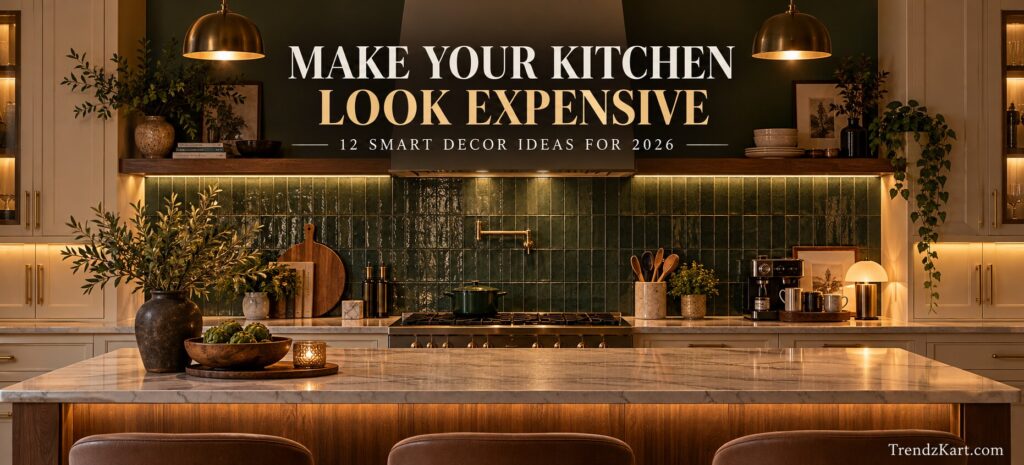
A beautiful kitchen does not always need marble countertops, custom-built cabinets or an expensive renovation.
Sometimes, the most noticeable changes come from surprisingly small decisions: warmer lighting, a better-organized countertop, carefully chosen colours or a simple shelf that makes everyday essentials look intentional.
Imagine walking into a kitchen where the countertops feel crowded, the lighting is harsh and every accessory seems to compete for attention. Now imagine the same room with a clean preparation area, warm under-cabinet lighting, matching storage containers and a few natural textures.
The cabinets and appliances have not changed, yet the room feels completely different.
That is the power of thoughtful kitchen decor.
In 2026, creating a stylish kitchen is less about copying a picture-perfect showroom and more about balancing beauty, comfort, practicality and personal character.
Whether you live in a compact apartment, a rented home or a spacious family house, this guide explores 12 realistic ways to refresh your kitchen without committing to a major renovation.
You will also find budget guidance, styling combinations, common mistakes to avoid and simple ideas that work across different kitchen layouts.
Editorial note: The suggestions below are general decorating guidance, not claims of personally tested products or professional renovation services. Costs are illustrative and vary by country, material and installation requirements.
1. Create a Warm, Layered Lighting Scheme
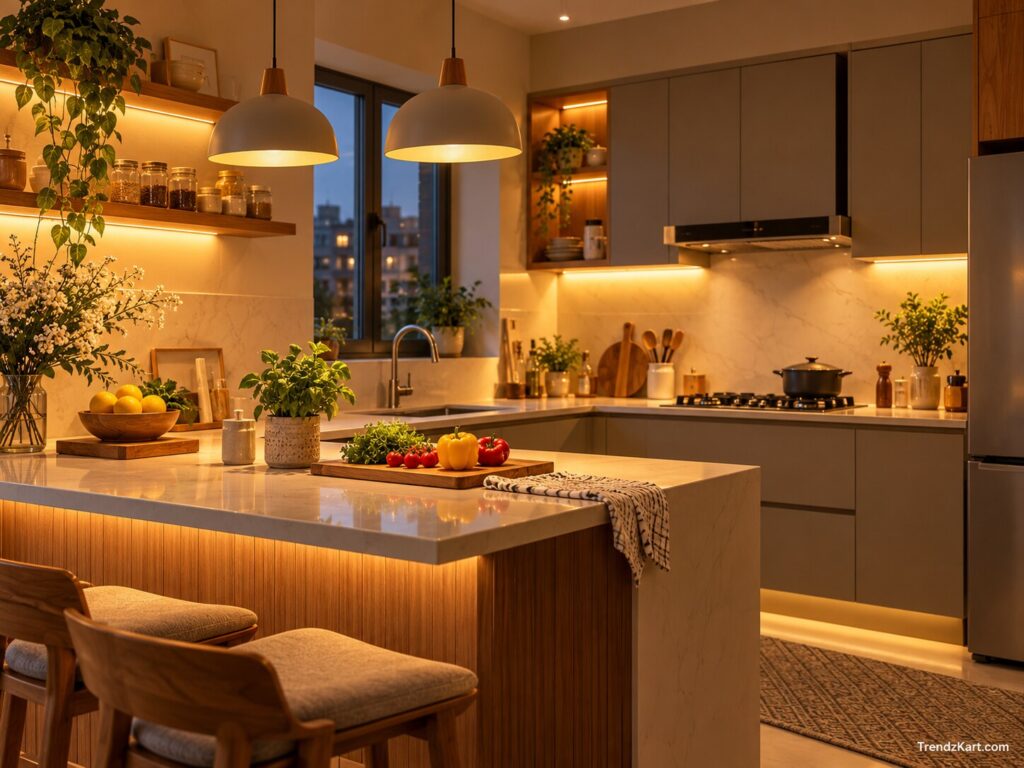
Lighting is one of the easiest ways to change how a kitchen feels.
A room with only one bright ceiling fixture can appear flat, especially when overhead cabinets cast shadows across the countertop.
Layered lighting solves this by combining different sources of illumination.
Ambient lighting provides overall brightness. Task lighting helps illuminate food preparation areas. Accent lighting creates atmosphere around shelves, architectural features or decorative displays.
For example, a simple kitchen with white cabinets and dark countertops can feel much more inviting when warm-toned lighting is introduced beneath the upper cabinets.
The result is a softer visual transition between the work surfaces and surrounding cabinetry.
How to Style It
Choose under-cabinet lighting that provides adequate visibility without creating uncomfortable glare. Keep decorative accent lights subtle, especially in a small kitchen.
Use lighting with a consistent colour appearance to avoid a mismatched look.
Best for: Small apartments, modern kitchens and spaces with limited natural light.
Budget idea: Battery-powered or plug-in LED lighting can be an option where appropriate.
Important: Select lighting suitable for its location and follow electrical and installation safety guidance, particularly near water, heat and cooking surfaces.
2. Introduce Natural Wood Without Replacing Cabinets
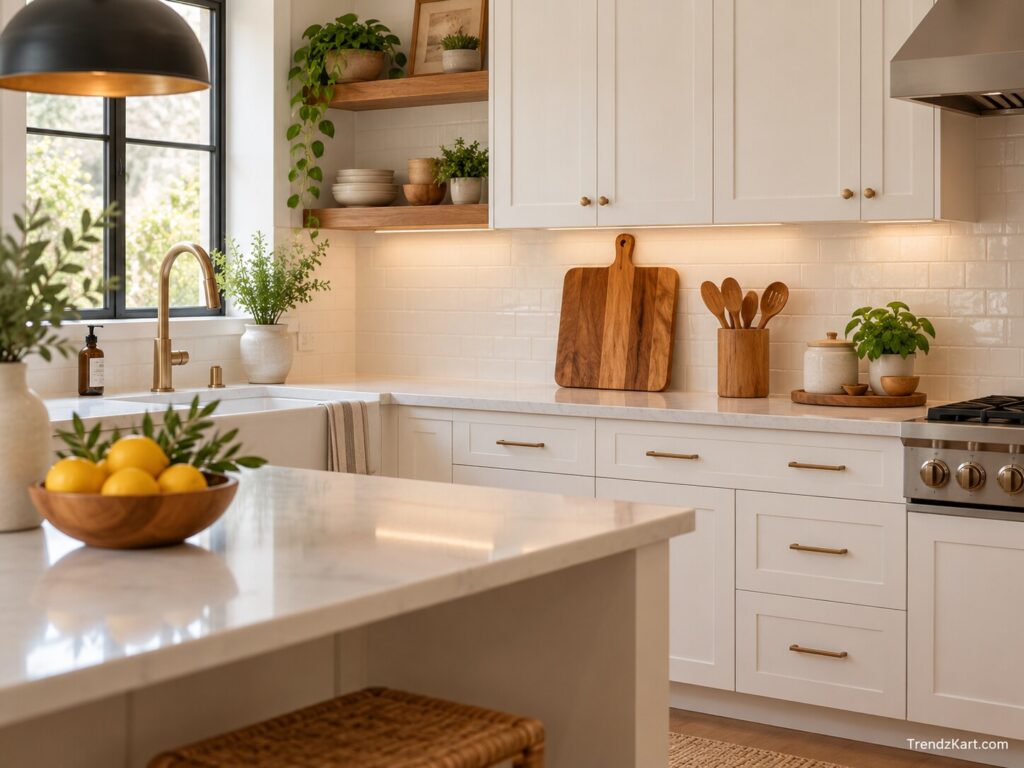
Wood adds warmth to kitchens that feel overly glossy, cold or industrial.
You do not need wooden cabinets to achieve this effect.
A wooden cutting board, open shelf, utensil holder or carefully chosen tray can introduce a natural texture without dominating the room.
The key is restraint.
For example, a kitchen with white cabinetry, stainless-steel appliances and pale countertops may benefit from a few medium-toned wooden accessories.
These details create contrast while keeping the overall appearance clean.
A Simple Styling Formula
Combine one large wooden cutting board, a smaller wooden accessory and a neutral ceramic container.
Avoid filling every available surface with wooden items.
Best for: Minimalist, Scandinavian-inspired and contemporary kitchens.
Budget idea: Start with practical accessories you already need, rather than purchasing objects solely for decoration.
Design tip: Choose similar wood tones for a cohesive appearance, but do not worry about making every item identical.
3. Give Your Backsplash a Fresh Visual Identity
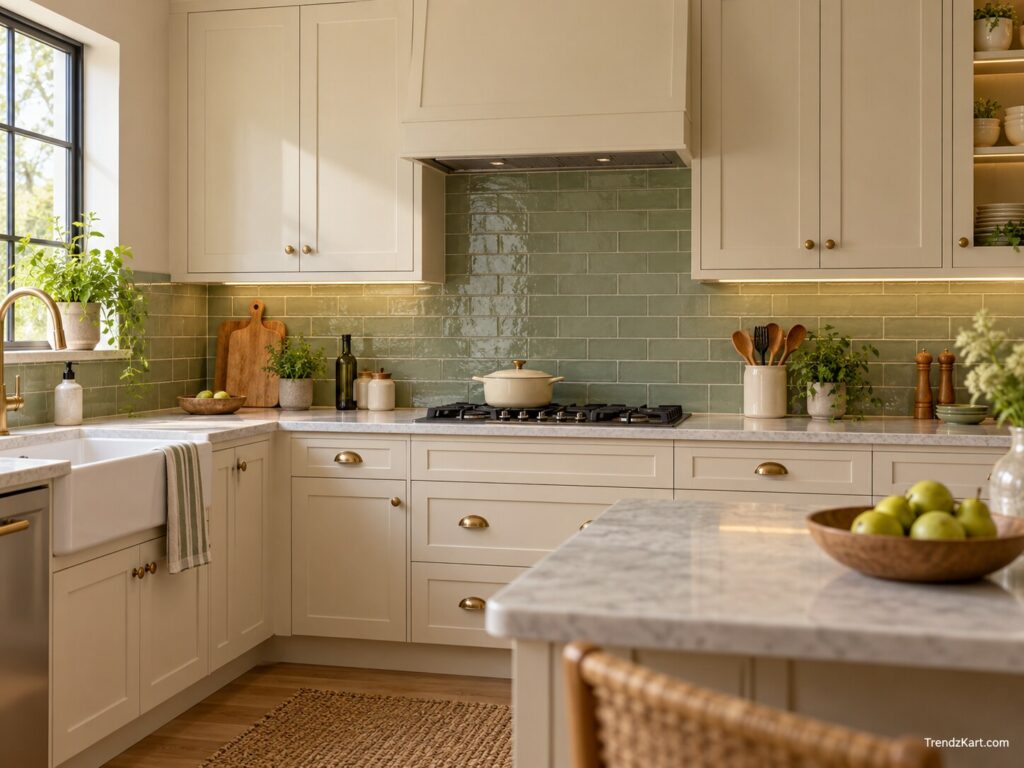
The backsplash is one of the most visible surfaces in many kitchens.
It can also strongly influence whether the space feels modern, traditional, colourful or understated.
A backsplash does not need a complicated pattern to create visual interest.
Simple rectangular tiles, textured finishes and restrained colour choices can be attractive when they complement the cabinets and countertops.
For renters or homeowners avoiding renovation, certain removable backsplash products may offer a temporary visual refresh.
However, not every adhesive product is suitable for every kitchen surface.
What to Consider
Before choosing a backsplash, check how easily it can be cleaned, whether it tolerates the temperatures and moisture levels of the intended location, and whether it is appropriate for the existing wall.
Best for: Kitchens with visually plain walls or dated backsplash finishes.
Budget idea: Consider refreshing a small, visible section rather than changing every wall.
Important: Keep decorative adhesive materials away from areas where their manufacturer does not approve exposure to cooking heat or flames.
4. Turn Everyday Storage Into Part of the Decor
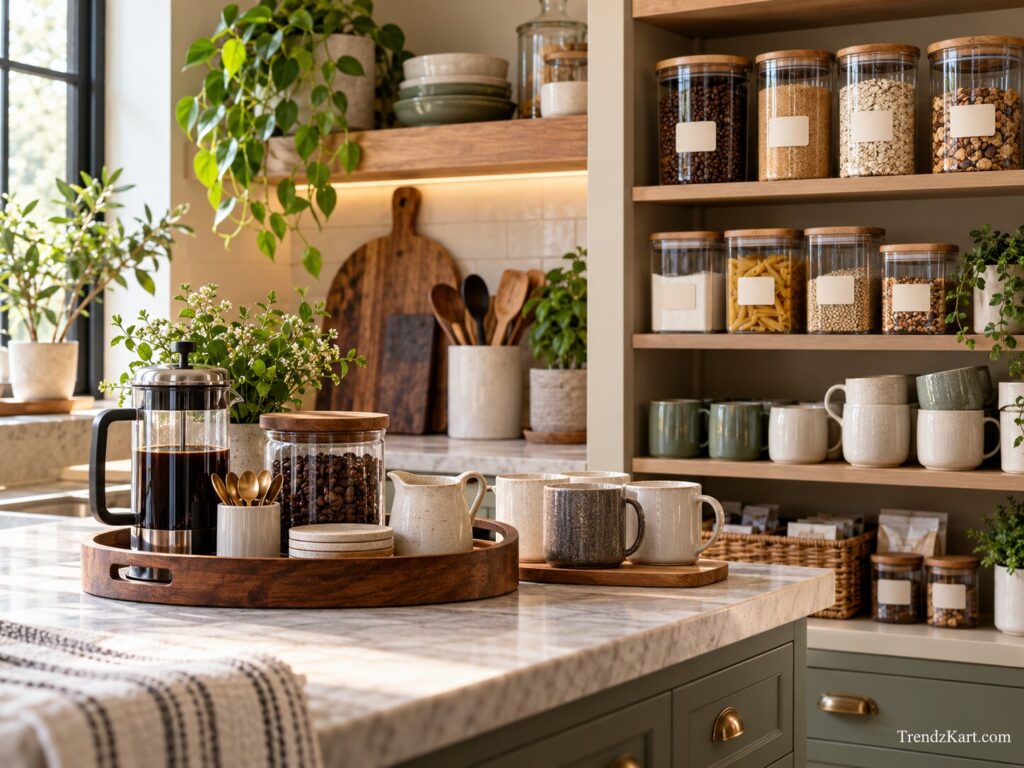
A kitchen becomes visually busy when packaging, containers and utensils have no clear arrangement.
Thoughtful storage can improve both organization and appearance.
Instead of displaying numerous unrelated packages, group frequently used items into suitable containers and trays.
For example, a coffee station may look more intentional when mugs, coffee supplies and a small tray are arranged together.
Likewise, a pantry shelf can feel calmer when containers are grouped by size and purpose.
How to Make It Work
Use transparent food-safe containers where visibility is helpful. Label items clearly, particularly when transferring food from its original packaging.
Avoid buying decorative jars that are difficult to clean or do not seal properly.
Best for: Busy family kitchens, compact apartments and open-shelf layouts.
Budget idea: Reorganize existing containers before buying new ones.
Design tip: Consistent shapes often create more visual harmony than purchasing every container in exactly the same colour.
5. Add One Open Shelf Instead of Filling Every Wall
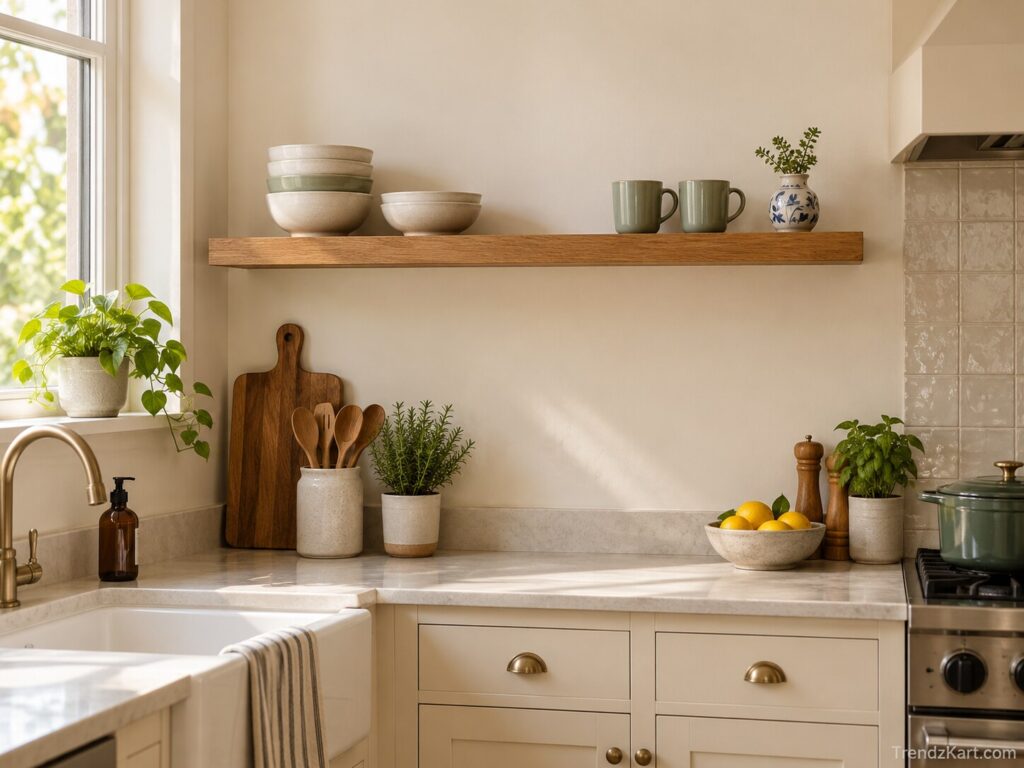
Open shelving can make a kitchen feel lighter and more personal.
However, too many open shelves may increase visual clutter and require frequent cleaning.
A better approach is to create one carefully arranged display area.
For example, a short shelf might hold a few everyday bowls, two mugs and a small decorative item.
The display should feel useful rather than overcrowded.
The Balance Rule
Combine functional items with limited decorative accents.
Leave visible space between groups of objects so the shelf does not appear overloaded.
Choose materials and finishes that complement the surrounding cabinetry.
Best for: Small kitchens, breakfast corners and homes with simple decor.
Budget idea: Style an existing shelf before installing anything new.
Important: Check wall strength, suitable anchors and load limits. Avoid placing fragile or heavy objects where they could fall onto cooking or preparation areas.
6. Use a Calm Two-Colour Palette
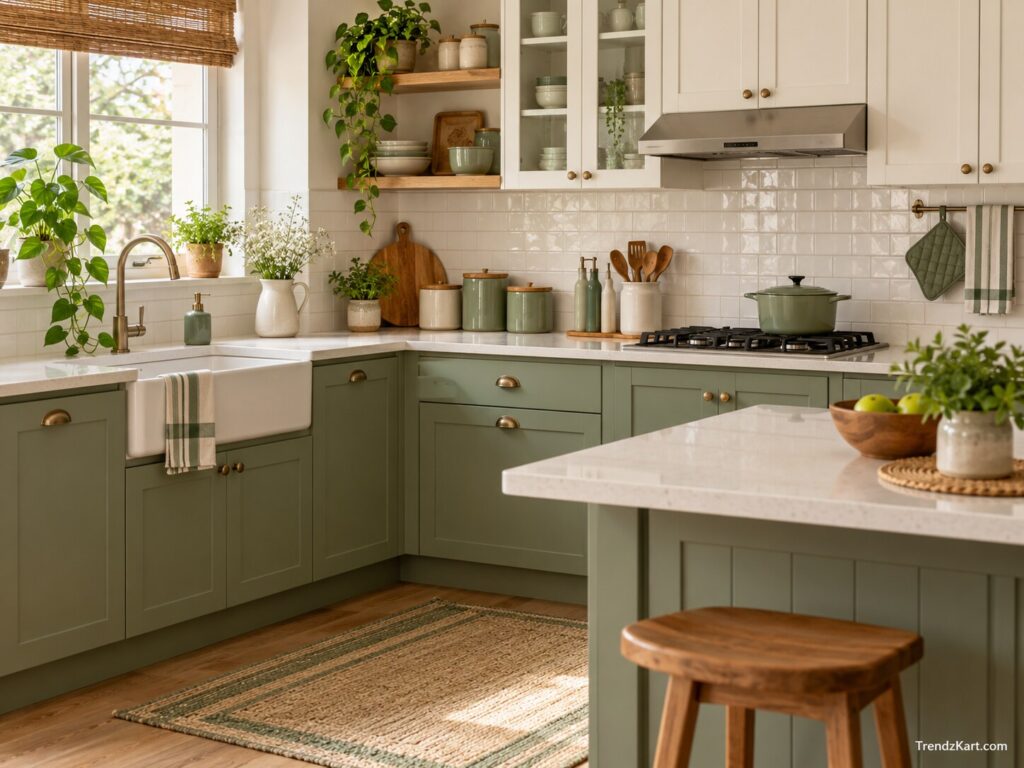
Colour can change the mood of a kitchen even when the layout remains untouched.
One of the easiest ways to create a cohesive appearance is to select two dominant colours and use other tones as small accents.
For example, warm white and sage green can create a relaxed atmosphere.
Cream and walnut can feel warm and timeless.
Soft grey and muted blue can produce a cooler, contemporary look.
The ideal palette depends on natural light, existing materials and personal preference.
Three Kitchen Colour Combinations Worth Exploring
| Main colour | Supporting colour | Overall feel |
|---|---|---|
| Warm white | Sage green | Calm and natural |
| Cream | Walnut brown | Warm and welcoming |
| Soft grey | Muted blue | Clean and contemporary |
You do not necessarily need to repaint cabinets.
Dish towels, containers, wall decor and small accessories can introduce a coordinated palette at a lower cost.
Best for: Kitchens with mismatched accessories or visually busy decor.
Budget idea: Change textiles and movable accessories before considering permanent finishes.
7. Create a Beautiful Coffee or Tea Corner
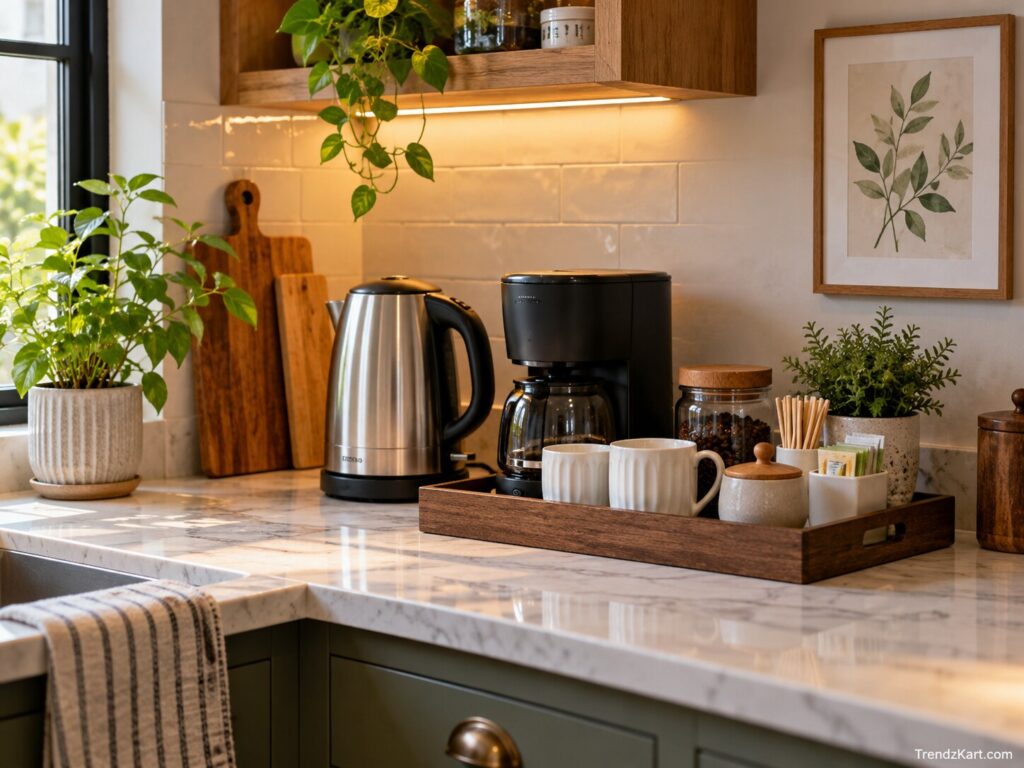
A dedicated beverage station can turn a practical routine into a small design feature.
You do not need a large countertop or an expensive coffee machine.
A tray, a few cups, a storage container and a compact arrangement of everyday essentials may be enough.
For a tea-focused household, the same idea works with tea containers, cups and a kettle.
Example Setup
Place the kettle or coffee machine where it can be used safely, then group the supplies nearby.
Keep cables away from water and hot surfaces.
Avoid adding unnecessary decorations that make the station difficult to clean.
Best for: Apartments, family kitchens and homes where tea or coffee is part of the daily routine.
Budget idea: Use an existing tray and matching cups rather than purchasing a complete decorative set.
Design tip: A small framed print on a nearby wall can make the corner feel more intentional without occupying the work surface.
8. Upgrade the Look With Cabinet Hardware
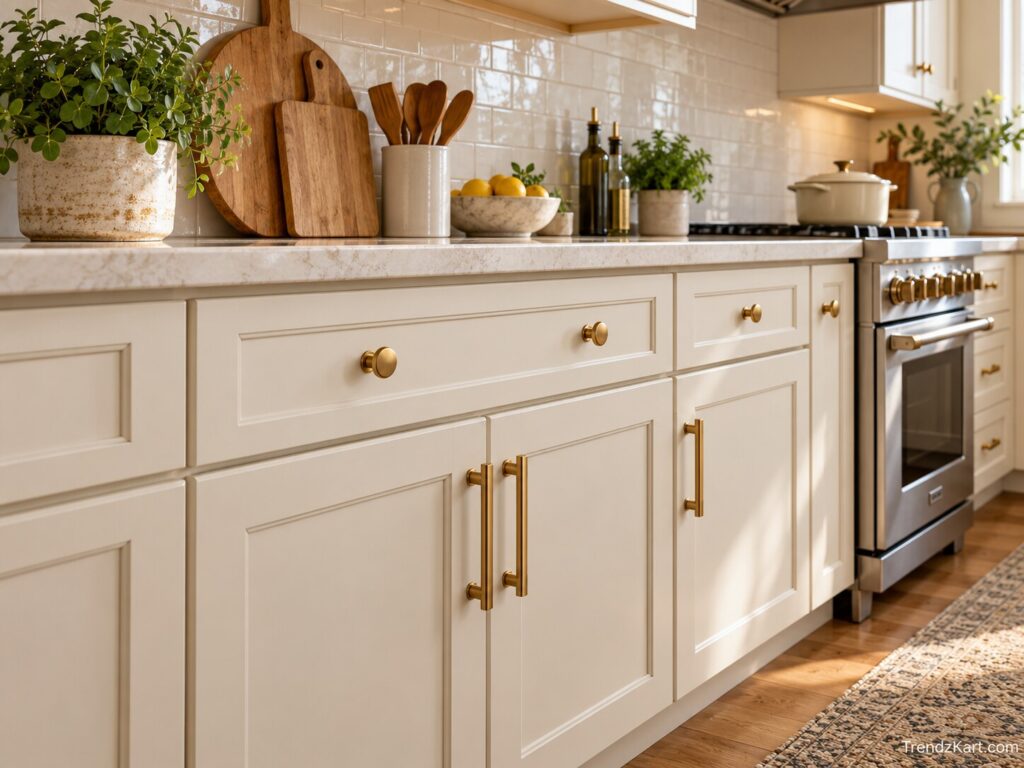
Cabinet handles and knobs may seem like minor details, but they can influence the overall character of a kitchen.
Simple hardware can create a clean contemporary appearance, while more traditional shapes may complement classic cabinetry.
Finishes such as brushed metal, black and warm metallic tones can produce different visual effects.
However, a stylish handle is only a good purchase if it fits the cabinet correctly.
Before Buying
Measure the existing hole spacing, check the thickness of the cabinet fronts and confirm the hardware’s installation requirements.
If you rent your home, choose replacements that can use existing holes and retain the original hardware for restoration where permitted.
Best for: Kitchens with functional cabinets but dated or mismatched handles.
Budget idea: Replace the hardware on a small group of cabinets first to see how the finish works in the room.
9. Add a Washable Kitchen Runner for Texture
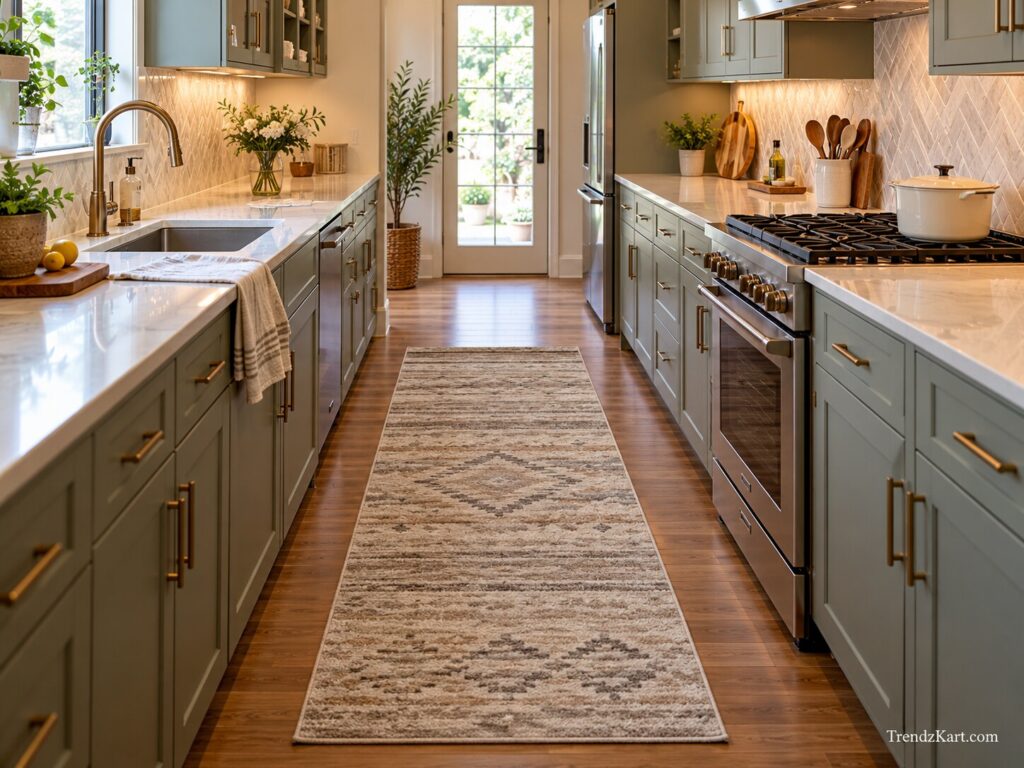
Kitchen floors are often overlooked when decorating.
A carefully selected runner can introduce pattern, colour and softness without changing the flooring.
In a long, narrow kitchen, a runner may also visually connect the different work areas.
Neutral patterns work well in calm interiors, while a restrained geometric design can add interest to a simple kitchen.
What Matters More Than Appearance?
The runner should be easy to clean and appropriate for a kitchen environment.
It should not create a slipping or tripping hazard, obstruct cabinets or sit dangerously close to heat sources.
Best for: Galley kitchens, long layouts and spaces with plain flooring.
Budget idea: Choose one practical, washable runner rather than several small mats.
Design tip: Select a pattern that complements the existing colours without competing with the backsplash.
10. Bring in Greenery Without Creating Countertop Clutter
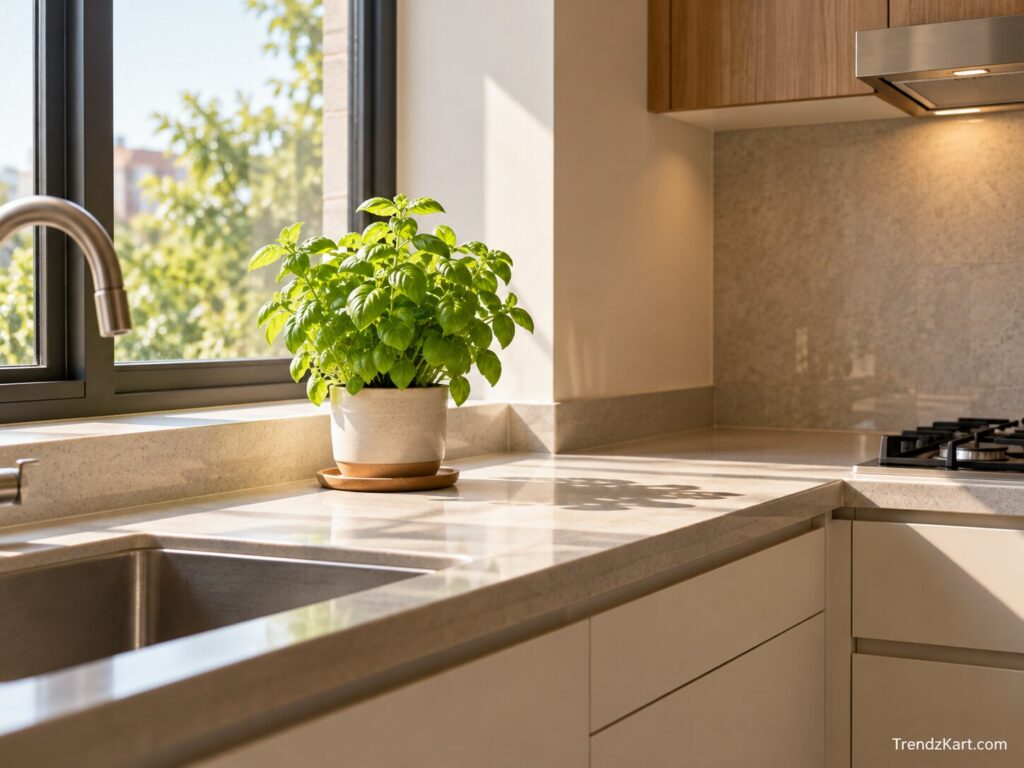
Plants can add freshness to a kitchen, particularly when the room has hard surfaces and neutral colours.
However, not every kitchen provides suitable growing conditions.
Some plants require more light than a kitchen can offer. Others may not tolerate heat or humidity fluctuations.
Herbs can be useful where appropriate growing conditions exist, while low-maintenance decorative plants may suit other spaces.
How to Style Greenery
Start with one plant in a suitable location.
Choose a container with appropriate drainage arrangements and protect surrounding surfaces from moisture.
Keep plants away from cooking flames, hot appliances and food preparation areas where contamination could occur.
Best for: Kitchens with suitable natural light and a simple colour scheme.
Budget idea: One healthy plant often creates more impact than several poorly placed decorative pots.
11. Make Small Kitchens Feel Larger With Visual Simplicity
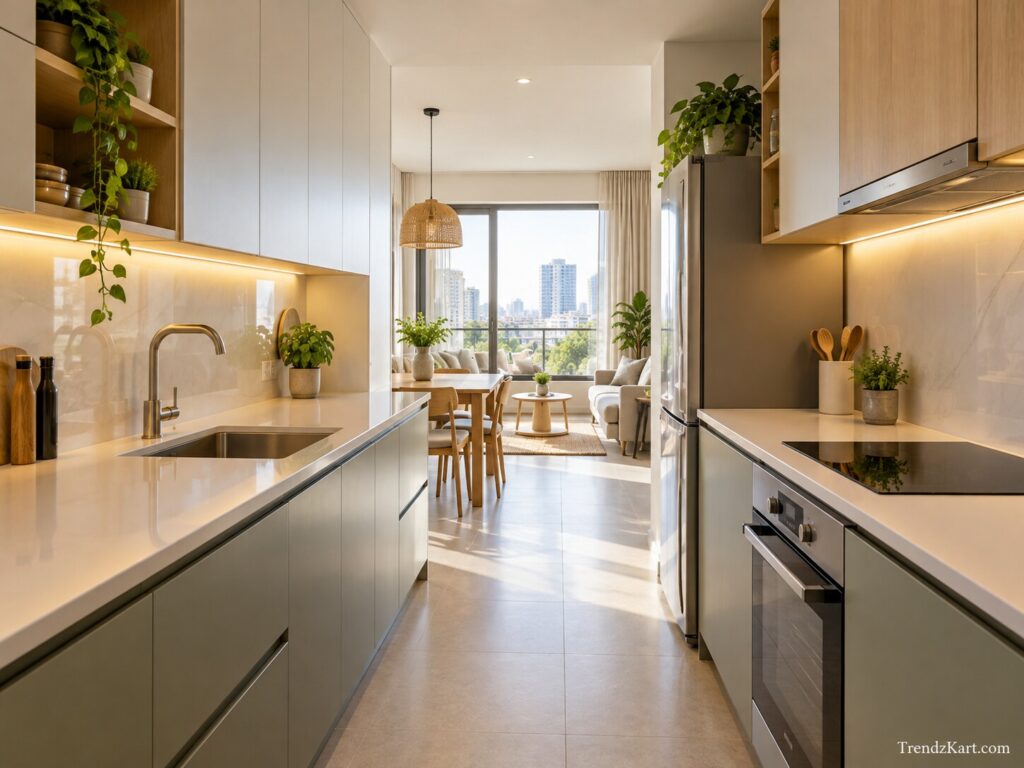
A small kitchen does not necessarily need more storage products.
Sometimes, it needs fewer visible objects and a more thoughtful arrangement.
Crowded countertops make a space feel smaller because the eye has little room to rest.
Start by removing items that are rarely used.
Keep essential tools close to the areas where they are needed and move occasional-use appliances into accessible storage.
Three Changes That Can Make a Difference
Clear the main preparation area. A visibly open work surface makes the kitchen feel more functional.
Use consistent finishes. Repeating a few colours and materials reduces visual fragmentation.
Improve lighting and sightlines. Better illumination and less clutter can make the space feel more open.
Reflective surfaces may help distribute light, but they also reveal fingerprints and require regular cleaning.
Best for: Studio apartments, rental kitchens and compact urban homes.
Budget idea: Try a complete countertop reset before buying organizers.
12. Create One Statement Feature Instead of Decorating Everything
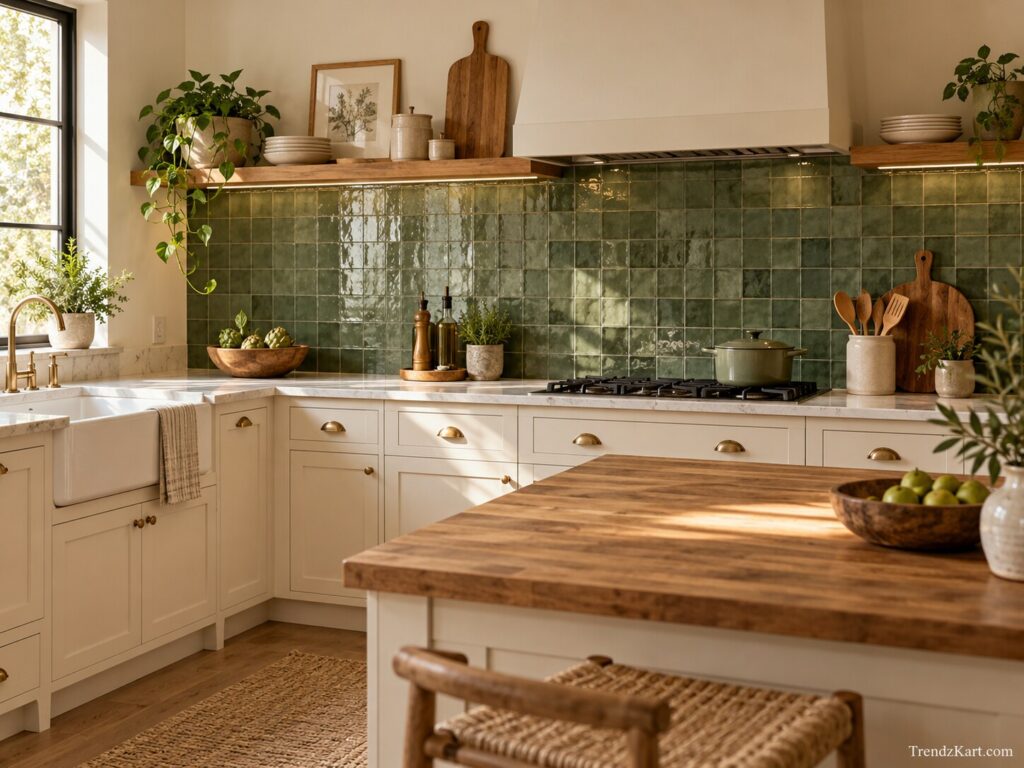
A beautiful kitchen does not need every corner to attract attention.
In fact, too many competing decorative elements can make the room feel chaotic.
A more effective strategy is to select one focal point.
This could be a distinctive pendant light, a carefully styled open shelf, an attractive backsplash or a framed piece of artwork in a suitable location.
The surrounding decor should support that feature rather than compete with it.
Example
Imagine a kitchen with cream cabinets, wooden accessories and a simple countertop.
A single muted green backsplash could provide enough visual character without requiring colourful containers, patterned rugs and decorative wall pieces everywhere.
Best for: Homeowners and renters who want a noticeable change without purchasing many accessories.
Budget idea: Choose one meaningful upgrade and keep the remaining decor restrained.
Kitchen Decor Budget Planner: What Can You Change Without Renovating?
The following amounts are illustrative US-dollar planning ranges, not current retail quotations. Actual costs depend on country, product quality, quantity and installation.
| Decor update | Illustrative budget |
|---|---|
| Countertop styling and trays | $10–$35 |
| Storage jars and organizers | $15–$60 |
| Kitchen textiles | $10–$40 |
| Small plants and pots | $10–$35 |
| Cabinet handles | $20–$80 |
| Under-cabinet lighting | $20–$75 |
| Kitchen runner | $20–$70 |
| Shelf accessories | $15–$60 |
A practical approach is to begin with cleaning, decluttering and rearranging items you already own. Then purchase only the accessories that fill a genuine functional or visual need.
Three Complete Kitchen Decor Looks to Try
Look 1: Warm Minimalist Kitchen
Combine warm white surfaces, light wooden accessories, neutral ceramic containers and soft lighting.
Keep countertops mostly clear and use one carefully styled shelf.
This look is particularly suitable for compact kitchens where simplicity helps create a sense of openness.
Look 2: Modern Earth-Tone Kitchen
Use muted green, warm beige, natural wood and understated metal finishes.
Add a few coordinated textiles and choose one decorative focal point.
This approach can make a contemporary kitchen feel more relaxed and welcoming.
Look 3: Clean Contemporary Kitchen
Combine soft grey, white and subtle black accents.
Choose simple cabinet hardware, streamlined storage and functional lighting.
Use a small amount of greenery to prevent the room from feeling overly stark.
Five Kitchen Decorating Mistakes to Avoid
Buying too many accessories: More decoration does not always create a better design. Overcrowded surfaces reduce both visual appeal and functionality.
Ignoring lighting: Attractive materials can look disappointing under unsuitable lighting.
Choosing appearance over cleaning: Open shelving, intricate accessories and textured finishes may require additional maintenance.
Following trends without considering the home: A design that looks beautiful in a large showroom may not suit a compact kitchen.
Overlooking safety: Decorative items must not interfere with ventilation, electrical equipment, food preparation, heat clearance or safe movement.
Frequently Asked Questions
1. How can I make my kitchen look expensive on a small budget?
Focus on consistent colours, good lighting, uncluttered countertops, coordinated storage and one attractive focal point. Expensive materials are not essential.
2. What colours work well for kitchen decor in 2026?
Warm whites, muted greens, earthy neutrals, soft blues and natural wood tones are useful options. The best choice depends on your kitchen’s light, existing finishes and personal taste.
3. How can I decorate a small kitchen without making it crowded?
Prioritize clear work surfaces, practical storage, simple colour combinations and a limited number of decorative accessories.
4. Are open kitchen shelves practical?
They can be practical for frequently used items, but exposed objects may collect dust and cooking residue. Avoid overcrowding them.
5. Can renters improve kitchen decor without permanent changes?
Yes. Movable organizers, textiles, trays, suitable lighting and removable accessories can refresh a kitchen. Always check lease rules before making alterations.
6. Is peel-and-stick backsplash suitable for every kitchen?
No. Suitability depends on the product, surface condition, heat exposure and installation requirements. Follow the manufacturer’s guidance.
7. How much should I spend on kitchen decoration?
Set a budget based on your priorities. Begin with free improvements such as decluttering and rearranging before buying additional items.
8. What is the easiest kitchen decor upgrade?
For many kitchens, clearing the countertop and improving lighting can make a noticeable difference without a major renovation.
Final Thoughts: A Beautiful Kitchen Should Also Be Easy to Live In
A kitchen should not only look attractive in photographs. It should support cooking, cleaning, storage and everyday routines.
The most successful decorating decisions often combine visual simplicity with practical improvements.
Warm lighting can make a room more inviting. Natural textures can soften modern surfaces. Coordinated storage can reduce clutter. A carefully selected focal point can give an ordinary kitchen more personality.
And none of these changes necessarily requires replacing the cabinets, countertops or flooring.
Before purchasing new decor, take a close look at how your kitchen is used. Identify what feels inconvenient, what looks visually crowded and which small changes could make the biggest difference.
At TrendzKart, we believe thoughtful home improvements should be practical, approachable and suited to real everyday living.
Explore more Home & Kitchen inspiration, product comparisons and buying guides at TrendzKart.com.